








 800-963-5724
Mertik Maxitrol G6R-R3AM Beeping: Every Beep Pattern Explained
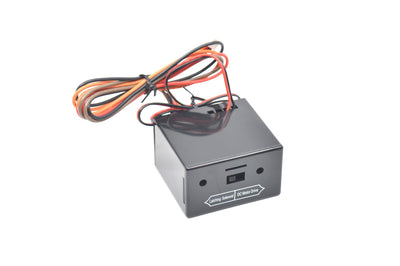
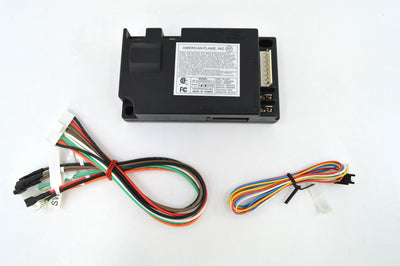
If your gas fireplace has started beeping at you, the sound is coming from the Mertik Maxitrol receiver — the small black box hidden under or beside your firebox. Beeps are the G6R-R3AM's only way of talking to you: some are perfectly normal, some are a low-battery warning, and a few point to a real fault. This guide decodes every beep pattern documented in the official Mertik Maxitrol GV60 operating instructions, shows how to replace the batteries behind most beeping complaints, and walks through the re-pairing procedure step by step.
Quick Reference: Mertik Maxitrol G6R-R3AM Beep Patterns
| What you hear | When it happens | What it means |
|---|---|---|
| One short beep | When you press OFF + large flame together | Normal — the ignition start sequence has begun |
| Continuing beeps | During startup, while the igniter sparks | Normal — ignition is in process |
| Rapid/frequent beeps for about 3 seconds | Whenever the motor turns | Receiver batteries are low — replace all four AA batteries |
| One beep, but the valve knob does not move | When you press a flame button | Possible motor failure in the valve or receiver |
| One long beep | During operation or after a pairing attempt | Electrical problem, or the code-learning sequence failed / wiring is incorrect |
| One short beep, then one long beep | While holding the receiver's reset button | Normal — the receiver is ready to learn a new handset code |
| Two short beeps | After pressing the small flame button during pairing | Normal — the new code is set; pairing succeeded |
These meanings come from the Mertik Maxitrol GV60 installation and operating instructions and the G6R remote system owner's manual. If you hear a pattern that is not listed here — some owners report counting three or five beeps — consult the manual supplied with your specific appliance, because fireplace manufacturers occasionally add their own modules with additional signals.
Beeps During Normal Operation
Two beep patterns are part of every healthy ignition and require no action at all. When you start the fireplace from the handset, you press the OFF and large flame buttons at the same time. A single short beep confirms the start sequence has begun, and that is your cue to release the buttons. From that point, continuing beeps confirm the ignition is in process — the receiver is sparking the pilot. Once the pilot flame is proven, the beeping stops, main gas flows, and the motor drives the flame to full height automatically. If your fireplace beeps through startup and then lights normally, nothing is wrong.
Rapid Beeping When the Motor Turns: Low Receiver Batteries
This is the beep pattern behind most "why is my fireplace beeping?" searches. The official manual is specific: a low battery in the receiver is indicated by frequent beeps for 3 seconds when the motor turns. Many owners describe this burst as "eight beeps" when they count it out — however your ear parses it, a rapid volley of tones every time you adjust the flame means the four AA batteries in the receiver are running down.
Do not ignore this warning. Per the manual's automatic shut-off rules, when receiver battery power gets low enough, the system shuts the fire off completely. Mertik Maxitrol recommends replacing the receiver batteries at the beginning of each heating season if you are not using the optional AC mains adapter.
How to Replace the Batteries
Receiver Batteries (Under or Beside the Fireplace)
The G6R-R3AM receiver takes four 1.5 V "AA" batteries, and quality alkaline cells are recommended — skip the bargain brands and rechargeables, which start at a lower voltage.
- Open the lower louver or access panel of your fireplace and locate the black receiver box. On some installations the batteries sit in a separate external battery box wired to the receiver.
- Slide the battery cover off and remove the old cells. Never use metal tools to pry batteries out — the manual warns that doing so will render the receiver inoperable.
- Check the compartment for corrosion. Technicians report corroded battery contacts as the single most common service issue on these systems. Clean light corrosion with a dry cloth or a pencil eraser; heavy corrosion usually means the receiver should be replaced.
- Insert four fresh AA alkaline batteries, observing polarity, and replace the cover.
Good news: you do not need to re-pair the remote after a battery change. The manual states that the electronic code setting is a one-time procedure and is not required after changing the batteries of the handset or receiver.
Handset Batteries
Original G6R handsets use one 9 V battery; the redesigned handsets introduced in 2012 use three 1.5 V "AAA" batteries — check inside your battery door. Display handsets show a low-battery indicator on screen; on handsets without a display, the red LED grows dimmer as the battery fades. Mertik Maxitrol recommends replacing the handset battery about every two years.
Beeps During Pairing: The Re-Sync Procedure
If the receiver was replaced, or the handset and receiver have stopped talking to each other, you may need to re-learn the code. The system picks from among 65,000 random codes, and the beeps tell you exactly how the process is going. Here is the procedure from the official instructions:
- Press and hold the receiver's reset button until you hear two beeps — the first beep is short and the second is long. After the second, longer beep, release the reset button.
- Within the next 20 seconds, press the small flame button on the handset until you hear two additional short beeps. Those two short beeps confirm the new code is set.
- If you hear one long beep instead, the code-learning sequence failed or the wiring is incorrect. Check the 8-wire cable and connections, then try again.
If your remote is the thermostat-style G6R-H3T5 handset, our companion guide on how to program the Maxitrol Mertik G6R-H3T5 remote covers pairing plus clock, temperature, and timer setup in detail.
One Beep With No Movement, or One Long Beep
Two beep signals point beyond the batteries:
- One beep, but the gas control knob does not move: field troubleshooting guides flag this as a motor failure. The receiver heard your command but the valve motor is not responding.
- One long beep: an electrical problem — often wiring between the receiver, valve, and interrupter block, or a failed pairing attempt as described above.
For either signal, verify the 8-wire cable is fully seated at the receiver jack, then work through our Maxitrol GV60 receiver G6R-R3AM troubleshooting guide before condemning any parts.
When Beeping Means Replacement
Replace parts rather than batteries when you see these signs:
- Rapid low-battery beeping returns within weeks of installing fresh alkaline batteries — the receiver may be draining cells due to internal damage or corrosion.
- The receiver will not complete the pairing sequence (repeated long beeps) even with verified wiring.
- One-beep-no-movement motor failure symptoms persist after checking connections.
- There is visible corrosion, water exposure, or heat damage on the receiver board. The manual is blunt about water: a control that has been wet must be replaced, not dried out.
The fix is straightforward, because the receiver and handset are sold as a matched set. The Mertik GV60 receiver kit G6R-R3AM includes the receiver, handset, and 8-pin connector, and the R11575 Maxitrol remote kit for VF series GV60 fireplaces is the equivalent kit specified for vent-free systems. Both pair to your existing GV60 valve using the reset procedure above.
Frequently Asked Questions
Why is my Mertik Maxitrol fireplace beeping?
Short beeps during startup are normal ignition signals. A rapid burst of beeps lasting about 3 seconds every time the flame motor turns is the official low-battery warning for the receiver — replace its four AA batteries with quality alkaline cells.
What does 8 beeps mean on a Mertik Maxitrol receiver?
Owners often count the low-battery signal as eight quick beeps. The manual describes it as frequent beeps for 3 seconds when the motor turns, and the meaning is the same: the receiver batteries are low and should be replaced before the system shuts the fire off on its own.
How do I stop my gas fireplace receiver from beeping?
Install four fresh AA alkaline batteries in the receiver (and a fresh 9 V or three AAA batteries in the handset, depending on model). If rapid beeping continues with new batteries, inspect the battery contacts for corrosion and the wiring for loose connections; a receiver that keeps beeping after that typically needs replacement.
How do I sync my Mertik Maxitrol remote to the receiver?
Hold the receiver's reset button until you hear a short beep followed by a long beep, release, then within 20 seconds hold the handset's small flame button until two short beeps confirm the code is set. One long beep means the attempt failed — check the wiring and repeat.
Do I have to re-pair the remote after changing batteries?
No. Setting the electronic code is a one-time procedure. The pairing survives battery changes in both the handset and the receiver.
The Bottom Line
Most G6R-R3AM beeping is either normal ignition feedback or a polite request for fresh AA batteries. Learn the low-battery signal, swap the cells each fall, and keep the battery compartment clean, and your remote system will run quietly for years. When a receiver does reach the end of the road, Fireplace Choice stocks the complete GV60 ecosystem — receivers, handsets, and valves — so you can restore your fireplace with a single order. For a full tour of the system, start with our ultimate guide to the Maxitrol GV60 receiver G6R-R3AM, or see whether it is time for an upgrade in our guide to upgrading your gas fireplace with the Maxitrol GV60 receiver.
Safety note: if you ever smell gas, do not operate the appliance or any electrical switch — evacuate and call your gas supplier from outside. Gas service work should be performed by a qualified technician.
Need the remote? Maxitrol G6R-H3T5 transmitter
Most beep patterns trace back to the remote or its batteries. The Maxitrol G6R-H3T5 remote transmitter is the handheld for every Mertik Maxitrol GV60 system ($109.97, ships in 24h). If the receiver is the problem, the GV60 receiver kit (R11575) includes a new remote. Pairing steps are in our G6R-H3T5 programming guide.
- Tags: gv60, maxitrol, troubleshooting
← Older Post Newer Post →