








 800-963-5724
Maxitrol GV60 Pilot Light Won't Stay Lit: Diagnostic Guide
It is one of the most frustrating gas fireplace symptoms there is: the Maxitrol GV60 receiver beeps, the motor turns, the igniter clicks, the pilot lights — and then the flame drops out the moment the sparking stops. Because the GV60 is a flame-proving system, a pilot that will not stay lit is almost always one of four things: weak batteries, a dirty or misaligned pilot flame, a failing thermocouple circuit, or a worn valve magnet unit. This guide walks through each in the order a technician would, using the test values published for the GV60 system.
How the GV60 Proves a Flame
When you command ignition, the receiver's motor drives the valve to the pilot-only position, battery power energizes the gas valve magnet (you hear the solenoid engage with a distinct clunk), pilot gas flows, and the igniter sparks. Once the pilot lights, the thermocouple sitting in the flame heats up and generates a small current — measured in millivolts. A relay in the receiver then switches the magnet's power source from the batteries over to the thermocouple, and only then does the motor open the valve to the main burner.
That handoff is the critical moment. If the thermocouple is not producing enough current when the receiver stops supplying battery power, the magnet releases, the valve snaps shut, and your pilot dies. Every fix below protects that current path: flame, thermocouple, interrupter block, receiver terminals, and magnet unit.
Step 1: Rule Out the Batteries
It sounds too simple, but battery problems masquerade as valve problems on this system, because the batteries power the magnet during the startup window. The receiver runs on four 1.5 V "AA" alkaline batteries, and the official manual's low-battery warning is frequent beeps for about 3 seconds when the motor turns. Technicians testing the battery box look for no less than roughly 5.8 V DC — a set of AAs that reads fine at rest can sag during the ignition sequence.
- Install four fresh quality alkaline AA cells (Mertik Maxitrol recommends replacing them at the start of each heating season if you are not using the AC mains adapter).
- Inspect the battery compartment for corrosion — widely reported as the number one service issue on these receivers. Corroded contacts add resistance exactly where the magnet needs full voltage.
- Do not pry batteries out with metal tools; the manual warns this will render the receiver inoperable.
If fresh batteries fix the dropout, you are done. If the receiver still beeps a low-battery warning with new cells, the receiver itself may be failing.
Step 2: The Manual-Light Test
This five-minute test splits the problem in half. The GV60 valve's MANUAL knob lets you light the pilot without the receiver's electronics:
- Turn the MANUAL knob to MAN to expose the manual pilot valve operator.
- Push the operator in fully to start pilot gas flow and light the pilot (with the piezo igniter if fitted, or per your appliance's manual-lighting instructions).
- Hold the operator in for up to a minute while the thermocouple heats, then release slowly.
If the pilot stays lit when lit manually, the thermocouple circuit can hold the magnet — the problem is more likely in the receiver, batteries, or wiring. If it still drops out after holding for a full minute, the fault is in the flame, the thermocouple, or the magnet unit. One caution from the manual: if the pilot does not stay lit after several tries, turn the main valve knob to OFF rather than repeating endlessly.
Step 3: Look at the Pilot Flame Itself
The thermocouple can only make current if the flame actually cooks it. Mertik Maxitrol's specification for vented units: the pilot flame should envelop the top 3/8 to 1/2 inch of the thermocouple. A lazy, yellow, or sideways-blowing pilot will not keep the tip hot enough.
- Dirty pilot orifice: dust, pet hair, and spider webs restrict pilot gas — a weak flame that barely touches the thermocouple is the classic sign.
- Misalignment: if the pilot hood was bumped during cleaning or log placement, the flame may miss the thermocouple tip entirely.
- Vent-free ODS pilots: on vent-free systems the pilot is a calibrated oxygen depletion sensor — a failing ODS pilot is replaced, not adjusted. Our guide to gas fireplace pilot light won't stay lit: causes and fixes covers ODS symptoms across all brands.
Step 4: Test the Thermocouple Circuit
With a multimeter set to millivolts DC, you can check the entire current path at the receiver's terminals. The commonly used field values for the GV60 system:
- Thermocouple output: with the pilot burning, about 10–15 mV at the receiver's red (TC) terminal to ground.
- Circuit loss: no more than about 2–3 mV difference between the red and yellow terminals — more points to a corroded connection or damaged cable robbing the magnet of current.
- Startup voltage: roughly 5 mV or more at the yellow terminal during ignition as the batteries power the magnet — accompanied by the solenoid clunk.
If output is low or losses are high, work through the physical connections:
- Interrupter block: this small brass fitting threaded into the valve, where the thermocouple lands, is one of the most overlooked causes of pilot dropout. The manufacturer's instructions call for keeping its connections clean and dry, tightening the block a quarter turn beyond finger tight, and the thermocouple a quarter to half turn beyond finger tight — overtightening damages the seat, loose connections add resistance.
- Cable routing: avoid sharp bends — the instructions specify a minimum 1 inch (2.5 cm) bend radius on the thermocouple tubing, because kinks can cause it to fail.
- Thermocouple age: thermocouples are wear items. If connections are clean and tight and output still falls short with a healthy flame on the tip, replace the thermocouple.
Step 5: The Valve Magnet Unit
If the thermocouple is delivering healthy millivolts and the pilot still will not hold, suspicion falls on the magnet unit inside the GV60 valve — the electromagnet the thermocouple current holds open. Two field tests:
- Dropout voltage: watching the millivolt reading as the pilot is extinguished, the magnet should hold until the signal decays to roughly 2 mV. A magnet that lets go while the thermocouple is still producing strong output is weak.
- Dropout time: shut off the gas and count the seconds until you hear the magnet release. More than about 20 seconds is good; less than about 10 seconds indicates a tired magnet.
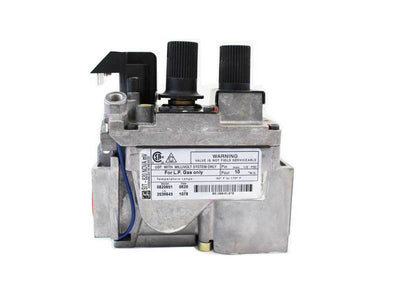
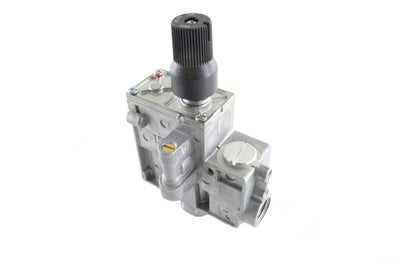
The GV60 valve body contains no user-serviceable components — Mertik Maxitrol warns against disassembling it — so a weak magnet means a replacement valve. Fireplace Choice carries GV60-family valves and related hardware in our gas valves and conversion kits collection.
Do Not Forget Gas Pressure and Venting
Two system-level issues mimic thermocouple failure. Marginal supply pressure — typical inlet specs run about 5–7 inches water column for natural gas and 11–14 inches for propane — starves the pilot so it cannot heat the thermocouple. And on direct-vent fireplaces, if the unit burns correctly with the glass off but not with it on, you have a venting problem, not a control problem. Both diagnoses involve manometers and combustion safety — leave them to a licensed gas technician.
When Replacement Beats Repair
If your diagnosis lands on the electronics rather than the flame path — the receiver drains batteries, will not complete its sequence, or the motor no longer turns — replace the receiver and handset as a matched kit. The Mertik GV60 receiver kit G6R-R3AM is the standard replacement for direct-vent systems, and the R11575 Maxitrol remote kit for VF series GV60 covers vent-free applications. For symptom-by-symptom help beyond the pilot, see our Maxitrol GV60 receiver G6R-R3AM troubleshooting guide.
Frequently Asked Questions
Why won't my Maxitrol GV60 pilot light stay lit?
The most common causes, in order: weak or corroded receiver batteries, a dirty or misaligned pilot flame that is not enveloping the top 3/8 to 1/2 inch of the thermocouple, resistance in the thermocouple-interrupter block connections, a worn thermocouple, or a weak valve magnet unit.
Why does the motor turn and the pilot spark, but the flame goes out when sparking stops?
That is the flame-proving handoff failing. During sparking the batteries hold the magnet; when sparking ends the thermocouple must take over. If it is not producing enough millivolts by then, the valve closes. Check batteries first, then the flame and thermocouple circuit.
How many millivolts should a Maxitrol GV60 thermocouple produce?
Field test guides for the GV60 look for about 10–15 mV at the receiver's red terminal with the pilot burning, with no more than 2–3 mV of loss across the circuit, and a magnet dropout at around 2 mV as the flame dies.
Can weak batteries really make the pilot go out?
Yes. Battery power energizes the valve magnet through the ignition sequence, and low receiver batteries are signaled by rapid beeping for about 3 seconds when the motor turns. Marginal batteries — or corroded contacts — are the first thing to eliminate.
Do I need a new gas valve or just a new thermocouple?
Test before you buy. Healthy millivolt readings with a pilot that still drops out point to the magnet unit (valve replacement); low readings with clean, tight connections point to the thermocouple; low readings that recover after cleaning point to the interrupter block.
The Bottom Line
A GV60 pilot that will not stay lit is a broken link in one chain: flame heats thermocouple, thermocouple current travels through the interrupter block to the receiver, and that current holds the valve magnet open. Test the links in order — batteries, flame, circuit, magnet — and the fault reveals itself. Fireplace Choice stocks the complete Mertik Maxitrol GV60 system, from receiver kits and handsets to valves and conversion hardware. New to the system? Start with our ultimate guide to the Maxitrol GV60 receiver G6R-R3AM, or if you are modernizing an older fireplace, see upgrading your gas fireplace with the Maxitrol GV60 receiver.
Safety note: if you smell gas, stop — do not operate the appliance or any electrical switch, evacuate, and call your gas supplier from outside. Pressure testing, valve replacement, and vent diagnostics belong to a qualified gas technician.
- Tags: gv60, maxitrol, troubleshooting
← Older Post Newer Post →