
 800-963-5724
Gas Fireplace Pilot Light Won't Stay Lit: Causes and Fixes
On a standing pilot (millivolt) gas fireplace or gas log set, the pilot stays lit only while the pilot flame heats the thermocouple enough to hold the gas valve's safety magnet open. When the pilot lights while you hold the knob in but goes out when you let go, Heat & Glo's and Empire's troubleshooting tables point to four things: the lighting routine, the pilot flame, the thermocouple or the valve magnet. Here is how to find which one, from the quick checks to the valve.
First, Which Problem Do You Have?
- Pilot goes out the moment you release the knob: follow the steps below.
- Pilot stays lit, then goes out later or while the fireplace is running: see pilot goes out while running.
- Pilot stays lit but the fireplace will not turn on: see pilot on, burner off.
- Pilot will not light at all, or the igniter clicks with no flame: use our clicking but not lighting guide.
How to Tell What Kind of Pilot You Have
Open the lower louver or access panel and look at the valve and pilot.
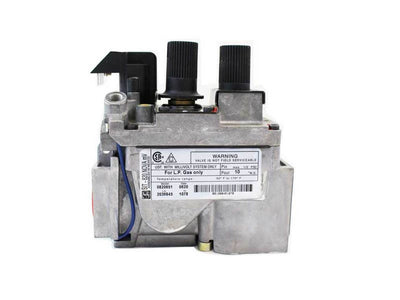
- Standing pilot with a knob marked OFF / PILOT / ON: a millivolt valve such as the SIT 820 Nova, a Robertshaw 700 series or a Honeywell. You light the pilot by hand, usually with a red or black piezo button, and it burns all season. This guide is for you.
- Thermocouple, thermopile or both at the pilot: the SIT 820 Millivolt Plus (common in direct-vent fireplaces) uses a thermocouple to hold the pilot and a thermopile to run the burner. The True Millivolt version and Robertshaw 700 millivolt valves run both jobs from the thermopile, so on those a weak thermopile can also drop the pilot.
- Vent-free fireplace or logs: an ODS (oxygen depletion sensor) pilot with its own thermocouple. See our ODS pilot guide.
- Battery receiver with a motor on the valve (Mertik Maxitrol GV60): use our GV60 troubleshooting guide.
- No knob, and the pilot sparks and lights only when you turn the fireplace on: electronic ignition (IPI). A pilot that will not stay lit there is a flame sensing problem; start with the clicking guide.
Step 1: Check the Gas Supply
Rule out the gas supply first. Heat & Glo and Empire both list it in their troubleshooting tables: make sure every shutoff valve between the fireplace and the gas main is open (there can be more than one), and on propane, that the tank is not empty. Empire adds that low gas pressure can come from a bent line, pipe that is too narrow or low line pressure, which is a job for a plumber or your gas supplier.
Step 2: Light It the Way the Maker Says
- Turn the knob to PILOT, press it all the way in and light the pilot.
- Keep holding: SIT says at least 30 seconds, until the air in the pilot line has cleared and the flame is strong; Empire says about one minute after the pilot lights.
- Release slowly. If it goes out, SIT says to wait at least five minutes before trying again so the safety interlock resets.
- After several failed tries, Empire's instructions say to turn the knob to OFF and call a service technician rather than keep trying.
If the fireplace has been off or the gas line was opened, Empire notes it takes a few minutes for air to purge from the lines on the first lighting.
Step 3: Look at the Pilot Flame
The thermocouple can only make its millivolts if the flame is on it. Heat & Glo and Empire want the thermopile and thermocouple tips covered with flame; Honeywell's spec is a flame covering 3/8 to 1/2 in of the thermocouple tip.
- Weak flame that does not cover the tips: Heat & Glo's maintenance list calls for inspecting pilot flame strength and cleaning or replacing the pilot orifice.
- Flame too high, too low or blowing: Heat & Glo and Empire both list this as the cause of frequent pilot outage and say to clean the pilot and adjust it for maximum flame on the thermocouple.
- Sooty or corroded sensor tips: Heat & Glo says to clean them with emery cloth or replace them.
Step 4: Check the Thermocouple Connection
The thermocouple nut at the valve is an electrical connection. Heat & Glo and Empire say it must be fully inserted and tight: hand tight plus a quarter turn. A loose nut and a crushed, overtightened nut both cause dropout.
Step 5: Test the Thermocouple
With the thermocouple unscrewed from the valve, put one meter probe on the end of its connector and the other on the copper lead, light the pilot and hold the knob in. Heat & Glo and Empire replace the thermocouple if it reads less than 15 mV. A new one reads 26 to 32 mV (Honeywell). Each reading is explained step by step in our thermocouple and thermopile testing guide, and the swap itself is in how to replace a gas fireplace thermocouple.
On thermopile-only valves (SIT True Millivolt, Robertshaw 700), test the thermopile instead: Robertshaw wants more than 325 mV across the thermopile and magnet with the switch open.
Step 6: The Gas Valve
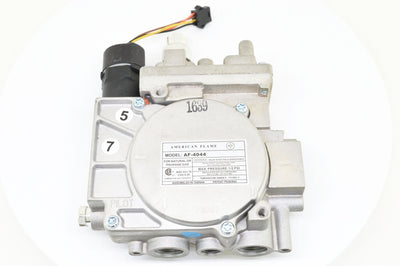
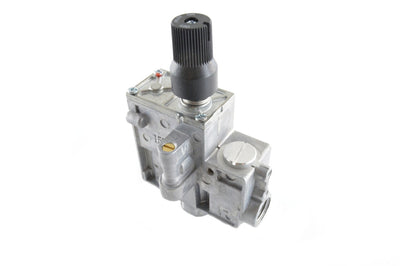
If the thermocouple reads more than 15 mV, the flame is good and the pilot still will not hold, Heat & Glo and Empire both say to replace the valve: its safety magnet is weak. On Robertshaw's thermopile-only valves, a good magnet holds until the reading falls to 120 mV or less. Gas valves are not repairable; SIT states the 820 has no field-serviceable parts. Valve replacement is in our gas valves section and is a job many owners hand to a licensed technician.
Pilot Goes Out While the Fireplace Is Running
If the pilot holds at first but dies later, or the pilot and burner go out together, Heat & Glo and Empire list these causes for direct-vent fireplaces:
- Propane tank empty or low
- Inner vent pipe leaking exhaust back into the fireplace
- Glass loose, or the glass gasket leaking at the corners
- Horizontal vent pitched wrong (Empire allows a downward slope of no more than 1/4 in, just enough to keep water out)
- Vent cap installed wrong or blocked by debris
- A worn thermocouple or thermopile
Vent and glass seal problems need a qualified technician.
Pilot Stays Lit but the Fireplace Will Not Turn On
Here the thermocouple is doing its job; the thermopile, switch or valve is not. Heat & Glo's checks:
- With the pilot lit and the switch OFF, the thermopile should read at least 325 mV at the valve's TH-TP and TP terminals (Empire: 350 mV).
- With the knob and switch ON, it should stay above 125 mV (Empire: 200 mV). If it does and the burner stays off, replace the valve.
- Jumper the switch terminals. If the burner lights, the switch is bad. Jumper the switch wires at the valve; if the burner lights now, the wiring is bad.
A plugged burner orifice is the other cause on Heat & Glo's list. A remote receiver is wired where the switch would be, so a dead receiver fails the same jumper test.
Parts for a Pilot That Won't Stay Lit
Match the part number in your owner's manual or the length and connector of the old part. Pilot parts come in natural gas (NG) and propane (LP) versions.
More by system: SIT 820 Nova troubleshooting · Robertshaw and Dexen standing pilot troubleshooting · Heat N Glo troubleshooting.
Frequently Asked Questions
Why does my gas fireplace pilot light keep going out?
If it keeps going out the moment you release the knob, Heat & Glo and Empire point to the thermocouple: a pilot flame that does not cover its tip, a loose nut at the valve, or a reading under 15 mV. If the thermocouple tests above 15 mV, it is the valve. If the pilot light keeps going out later while the fireplace runs, check the propane level, the glass seal and the vent.
Why won't my pilot light stay lit when I release the knob?
The valve's safety magnet is not getting enough millivolts. Hold the knob in longer (30 seconds to a minute), make sure the flame covers the tip, then test the thermocouple: under 15 mV means a new thermocouple.
Does the pilot light stay on in a gas fireplace?
On a standing pilot, yes: Empire says to leave the knob on ON through the heating season and turn it to OFF when the season ends. Electronic ignition fireplaces light the pilot only when you turn the fireplace on, though many have a continuous pilot mode; Empire's shuts the pilot off after 7 days with no activity.
My gas fireplace won't stay lit but the pilot stays on. What is wrong?
That points to the thermopile, the switch or remote, or the valve rather than the thermocouple. Test the thermopile with the switch off and on, then do the jumper test at the switch and at the valve.
Related Guides
- Tags: DIY repair, gas fireplace, pilot assembly, pilot light, thermocouple, thermopile, troubleshooting
← Older Post Newer Post →