








 800-963-5724
Gas Fireplace Clicking But Not Lighting: Diagnostic Guide
Your gas fireplace is clicking — you can hear the igniter firing — but no flame appears. This clicking-but-not-lighting problem tells you something important: your ignition system is at least partially working. The igniter is generating a spark, but the gas isn't igniting. That narrows down the possible causes significantly.
This diagnostic guide walks you through every reason a gas fireplace clicks without lighting and how to fix each one.
Understanding Gas Fireplace Ignition Systems
Gas fireplaces use several different ignition methods. Identifying which type your fireplace uses is the first step in troubleshooting:
Standing Pilot (Millivolt) Systems
These fireplaces have a pilot light that burns continuously. When you want heat, a wall switch, remote, or thermostat sends a signal to open the main gas valve. The continuously burning pilot flame ignites the main burner gas.
If you hear clicking in a standing pilot system, the clicking is usually coming from the piezo igniter that lights the pilot itself — not the main burner.
Intermittent Pilot Ignition (IPI) Systems
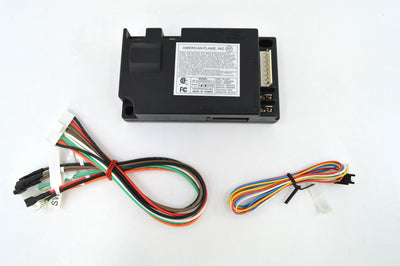
IPI systems only light the pilot when heat is called for. An electronic control module sends voltage to a spark igniter (you hear the clicking), which lights the pilot. Once the pilot is confirmed lit by a flame sensor, the control module opens the main gas valve.
In IPI systems, clicking without lighting is a more complex diagnostic because the electronic control module, spark igniter, flame sensor, and gas valve are all involved.
Direct Spark Ignition (DSI) Systems
Less common in residential fireplaces, DSI systems skip the pilot entirely. A spark igniter lights the main burner directly. Clicking without ignition here points to spark gap issues, gas supply problems, or control module failures.
Cause #1: No Gas Reaching the Pilot or Burner
The most fundamental reason for clicking without lighting: there's no gas to ignite. Check these items in order:
Gas Supply Valve
Locate the manual gas shutoff valve, usually behind the lower access panel or in the wall near the fireplace. The handle should be parallel to the gas line (open position). If it's perpendicular to the pipe, the gas is shut off.
Gas Meter / Main Supply
Verify that your home's gas supply is active. If other gas appliances (water heater, furnace, stove) are also not working, the issue is upstream of the fireplace.
Air in the Gas Line
If the fireplace hasn't been used in months, or if gas service was recently interrupted, air may have entered the gas line. It can take several ignition attempts to purge the air and get gas flowing to the pilot. Hold the pilot knob down and try lighting repeatedly — it may take 1-3 minutes of continuous gas flow to purge the air.
Cause #2: Weak or Misaligned Spark
You can hear clicking, but the spark may not be strong enough or properly positioned to ignite the gas.
Spark Electrode Gap
The spark electrode must be positioned at the correct distance from the ground (usually the pilot hood). Too far and the spark can't jump the gap. Too close and the spark may be too weak. The typical gap is 1/8" to 3/16" — check your installation manual for the exact specification.
Dirty Spark Electrode
Carbon buildup on the electrode tip can weaken the spark. Gently clean the tip with fine sandpaper or emery cloth. Don't use anything that leaves residue.
Cracked Ceramic Insulator
The spark electrode is insulated by a ceramic sleeve. If this ceramic is cracked, the spark can short to ground before reaching the gap, producing a clicking sound but no visible spark at the tip. Inspect the ceramic closely with a flashlight — hairline cracks can be hard to see.
Damaged Spark Wire
The high-voltage wire from the ignition module to the electrode must be intact and properly insulated. Check for cracked insulation, pinched wires, or loose connections. A damaged spark wire can cause the spark to arc to the metal firebox instead of at the electrode tip.
Cause #3: Pilot Assembly Issues
Even with a good spark, a compromised pilot assembly can prevent ignition.
Clogged Pilot Orifice
The pilot orifice is extremely small — typically 0.010" to 0.020" in diameter. Dust, insect debris (spiders love fireplace cavities), and mineral deposits can partially or fully block it. A clogged orifice means no gas flow to the pilot, regardless of how good the spark is.
Damaged Pilot Tube
The small aluminum or copper tube that supplies gas to the pilot assembly can kink, corrode, or develop leaks. Inspect the full length of the tube from the gas valve to the pilot.
Wrong Orifice Size
If someone previously converted the fireplace from natural gas to propane (or vice versa) without changing the pilot orifice, the gas flow may be wrong for ignition. Natural gas and propane require different orifice sizes.
If your pilot assembly needs replacement, browse our pilot assembly collection for OEM and universal options.
Cause #4: Electronic Control Module Failure (IPI Systems)
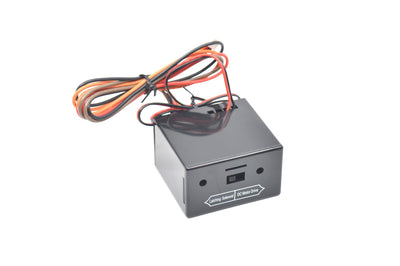
In IPI (Intermittent Pilot Ignition) fireplaces, the electronic control module orchestrates the entire ignition sequence. If the module is malfunctioning, it may:
- Send spark signals but not open the pilot gas valve
- Open the pilot gas valve but not generate a strong enough spark
- Abort the ignition sequence too quickly (before the pilot has time to establish)
- Fail to detect a lit pilot flame and shut everything down
Diagnostic Steps for IPI Modules
- Listen to the sequence: A normal IPI ignition sequence is: click-click-click (sparking for 15-30 seconds), then a whoosh as the pilot lights, then 5-10 seconds of flame proving, then the main burner opens. If the clicking stops too early, the module may be timing out prematurely.
- Check for error codes: Many IPI modules have an LED that blinks error codes. Count the blinks and check your installation manual for the code meaning.
- Power cycle the module: Turn the fireplace off at the wall switch or thermostat, wait 60 seconds, then try again. Some modules need a full reset to clear fault conditions.
Cause #5: Flame Sensor / Flame Rod Issues (IPI Systems)
After the pilot lights in an IPI system, a flame sensor (flame rod) must detect the flame and report back to the control module. If the flame sensor doesn't confirm the flame within a few seconds, the module shuts everything down as a safety precaution.
Common Flame Sensor Problems
- Dirty flame rod — The flame rod must make electrical contact with the flame. Carbon buildup insulates the rod and prevents flame detection. Clean it gently with fine steel wool.
- Cracked flame rod ceramic — Similar to the spark electrode, a cracked insulator on the flame rod can cause signal loss.
- Loose wiring — The wire from the flame rod to the control module can work loose from heat cycling. Check for a secure connection.
Cause #6: Piezo Igniter Failure (Standing Pilot Systems)
Standing pilot systems typically use a piezo igniter — a push-button device that generates a spark mechanically. If the piezo clicks but the pilot won't light:
- Worn piezo element — Piezo igniters wear out over time. The spark gets progressively weaker until it can no longer ignite gas. Replacement is the fix.
- Disconnected spark wire — The wire from the piezo button to the electrode can come loose. Check both ends.
- Verify gas flow — Make sure you're holding the pilot knob in the PILOT position AND pressing it down while clicking. The knob must be held down to open the pilot gas port.
Step-by-Step Diagnostic Process
- Verify gas supply — Shutoff valve open? Gas service active?
- Identify your ignition type — Standing pilot, IPI, or DSI?
- Check for visible spark — Turn off the lights and look for the spark at the electrode tip while clicking. No visible spark = igniter or wiring problem.
- Listen for gas flow — You should hear a faint hissing when the pilot gas valve opens. No hiss = gas supply or valve issue.
- Inspect the pilot assembly — Look for blockage, damage, or misalignment.
- Check the flame sensor (IPI only) — Clean and inspect.
- Check the control module (IPI only) — Look for error codes and try power cycling.
When to Call a Professional
Seek professional help if:
- You smell a strong gas odor — leave the area and call your gas company
- The control module is displaying error codes you can't resolve
- Multiple ignition components have been replaced without fixing the problem
- The fireplace has a complex electronic ignition system you're not comfortable diagnosing
- There's any sign of gas leakage at fittings or connections
Find Replacement Ignition Parts
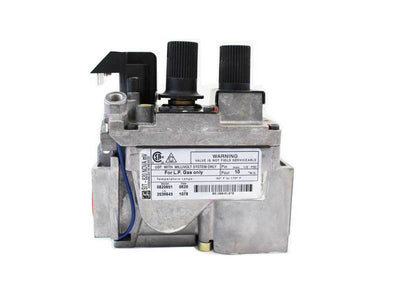
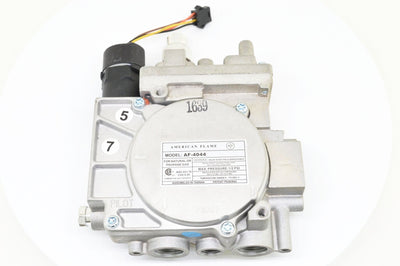
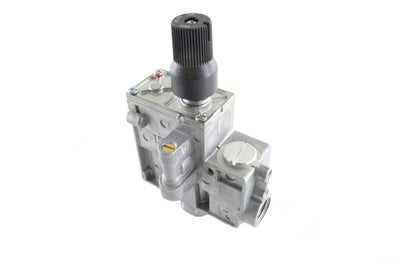
Whether you need a new pilot assembly, spark electrode, gas valve, or control module, Fireplace Choice has the parts to get your fireplace lighting again. Browse by brand or component type to find the right fit for your model.
← Older Post Newer Post →