








 800-963-5724
Vent-Free vs Direct Vent Gas Fireplaces: Pros, Cons, and Parts
When shopping for a gas fireplace or trying to understand the one already installed in your home, you will encounter two primary categories: vent-free (also called ventless) and direct vent. These represent fundamentally different approaches to combustion and venting, and the type you have determines everything from installation flexibility to the replacement parts you need.
This guide breaks down the differences between vent-free and direct vent gas fireplaces, covering how each type works, their advantages and disadvantages, safety considerations, and the parts that are specific to each system.
How Direct Vent Gas Fireplaces Work
A direct vent gas fireplace uses a sealed combustion system. It draws all combustion air from outside your home through a dedicated intake pipe and exhausts all combustion byproducts back outside through a separate exhaust pipe. These two pipes are typically combined into a single coaxial vent (a pipe within a pipe) that runs through an exterior wall or up through the roof.
Key Characteristics of Direct Vent
- Sealed glass front: The glass panel on a direct vent fireplace is a structural component that seals the combustion chamber from your living space. It is not decorative. Opening or removing the glass while the fireplace operates compromises the sealed system.
- Coaxial venting: The inner pipe carries exhaust gases out. The outer pipe (or a separate parallel pipe in some installations) brings combustion air in. This design ensures no indoor air is used for combustion.
- No impact on indoor air quality: Because the combustion system is completely sealed, a properly functioning direct vent fireplace does not affect the oxygen levels or air quality in your home.
- Installation flexibility: Direct vent fireplaces can vent horizontally through an exterior wall or vertically through the roof. This makes them suitable for homes without a chimney and for installation on interior walls with a vent run to the nearest exterior wall or roof.
Advantages of Direct Vent
- Safe for any room, including bedrooms and bathrooms (most building codes allow this).
- High efficiency ratings, typically 70 to 85 percent.
- No impact on indoor air quality or humidity.
- Works well in tightly sealed, energy-efficient homes.
- Available in very high BTU ratings for serious heating capacity.
- Wider variety of sizes, styles, and features from manufacturers.
Disadvantages of Direct Vent
- Requires venting through a wall or roof, which adds to installation cost and complexity.
- Less flexible placement. The unit must be located where a vent run to the exterior is feasible.
- The sealed glass front means you do not get the open-flame experience that some homeowners prefer.
- More components that can fail (venting, gaskets, glass seals).
How Vent-Free Gas Fireplaces Work
A vent-free gas fireplace burns gas without any external venting. All combustion byproducts, primarily water vapor, carbon dioxide, and trace amounts of carbon monoxide, are released directly into your living space. These units are designed to burn extremely cleanly with a very precise air-to-fuel ratio, and they include an ODS (Oxygen Depletion Sensor) as a mandatory safety feature.
Key Characteristics of Vent-Free
- No vent pipe required: The fireplace does not connect to any chimney, flue, or exterior vent. This is both the primary advantage and the primary concern with vent-free systems.
- ODS pilot assembly: Every vent-free gas fireplace must include an Oxygen Depletion Sensor. This device monitors the oxygen level in the room and automatically shuts off the fireplace if oxygen drops below a safe threshold (typically 18 percent). Learn more in our ODS pilot assembly guide.
- Lower BTU ratings: To keep combustion byproducts at safe levels, vent-free fireplaces are typically limited to 40,000 BTU or less. Many residential models are in the 20,000 to 30,000 BTU range.
- Room size requirements: Each vent-free fireplace is rated for a minimum room size. Installing a unit in a room smaller than its rating creates a risk of oxygen depletion and excessive moisture buildup.
Advantages of Vent-Free
- No venting means lower installation cost and nearly unlimited placement flexibility.
- Nearly 100 percent fuel efficiency since all heat stays in the room (no heat is lost through the vent).
- Can be installed on any wall, in existing fireplaces, or as freestanding units.
- Excellent supplemental heat source.
- Simpler installation for remodels or additions where running vent pipe is impractical.
Disadvantages of Vent-Free
- Combustion byproducts enter the living space, including water vapor and trace carbon monoxide.
- Increased indoor humidity can lead to condensation on windows and potential mold issues.
- Some people are sensitive to the combustion byproducts and experience headaches or irritation.
- Not legal in all jurisdictions. California, Massachusetts, and several Canadian provinces prohibit vent-free gas fireplaces. Always check local building codes.
- Not recommended for bedrooms in many jurisdictions, and generally not suitable for small, tightly sealed rooms.
- Lower BTU output compared to direct vent models.
- Require adequate room ventilation to operate safely.
Parts Differences: What You Need to Know
The type of fireplace you have directly affects the replacement parts you need. Here are the key differences in components between the two systems.
Pilot Assembly
- Direct vent: Uses a standard pilot assembly with a thermocouple and thermopile. The pilot burns inside the sealed firebox. Learn the difference between these components in our thermopile vs thermocouple guide.
- Vent-free: Must use an ODS (Oxygen Depletion Sensor) pilot assembly. This specialized pilot assembly includes the thermocouple, thermopile, and an oxygen sensor. ODS assemblies are not interchangeable with standard pilot assemblies, and you must replace them with the exact same ODS model for your fireplace.
Gas Valve
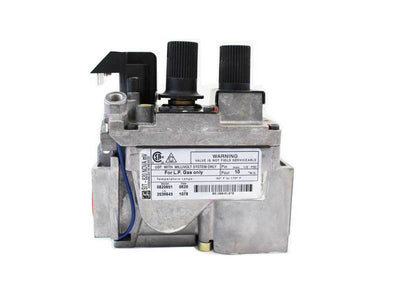
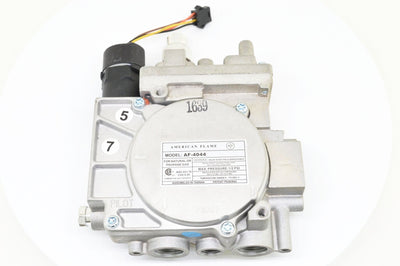
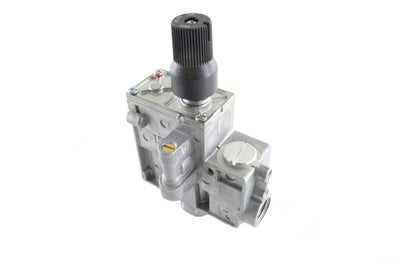
- Direct vent: Can use a wide range of gas valves from SIT, Honeywell, Robertshaw, and Maxitrol. Valve selection depends on the fireplace model and whether it uses millivolt or electronic ignition. See our gas valve types guide.
- Vent-free: Often uses the SIT 630 Eurosit valve, which has a built-in regulator and thermostat specifically designed for vent-free applications. The valve regulator settings for vent-free units are calibrated differently than those for vented fireplaces to maintain the precise air-to-fuel ratio required for clean combustion.
Browse gas valves and conversion kits for both types.
Glass
- Direct vent: The glass is a sealed, gasketed component. It must maintain an airtight seal with the firebox. Many direct vent fireplaces use tempered or ceramic glass. Replacing the glass requires a matching gasket, and the glass must be properly sealed to maintain the combustion system integrity.
- Vent-free: Glass on vent-free units is primarily decorative and for burn protection. Some vent-free models do not even have glass doors, using a mesh screen instead. When present, the glass is not sealed to the firebox like a direct vent.
Shop replacement fireplace glass for both configurations.
Log Sets
- Direct vent: Uses log sets designed for enclosed combustion chambers. Placement is critical and must follow the manufacturer diagram exactly. Incorrect placement in a sealed firebox can cause poor combustion and sooting.
- Vent-free: Uses specially designed log sets that work with the vent-free burner to maintain clean combustion. Vent-free log sets and burners are tested together and should not be mixed with components from other systems.
Blower and Fan
- Direct vent: Many direct vent fireplaces include or offer optional blower kits. The blower circulates air around the outside of the sealed firebox. See our guide on how to install a fireplace blower kit.
- Vent-free: Some vent-free models offer blower kits, though they are less common. Because vent-free fireplaces rely on convection and there is no sealed firebox to circulate air around, blower effectiveness may be different.
Browse blower motors and blower housing assemblies.
How to Determine What Type You Have
If you are not sure whether your gas fireplace is direct vent or vent-free:
- Check the rating plate: Look for terms like "Direct Vent," "DV," "Vent-Free," "VF," or "Unvented" on the rating plate. Our guide on how to find your gas fireplace model number shows you where to look.
- Look for a vent pipe: Go outside and check for a vent terminal on the wall behind or above your fireplace. If there is one, you have a direct vent or B-vent system.
- Check the glass seal: On a direct vent fireplace, the glass is sealed to the firebox with a gasket and is not easily opened. On a vent-free unit, the glass (if present) may open more freely or may not be sealed at all.
- Look for an ODS label: If the pilot assembly or the rating plate mentions ODS (Oxygen Depletion Sensor), you have a vent-free system.
Which Type Is Right for You?
If you are considering a new installation or deciding between the two types:
- Choose direct vent if you want a primary heat source, plan to install in a bedroom or small room, live in a tightly sealed home, prefer not to introduce combustion byproducts into your living space, or want the highest BTU options.
- Choose vent-free if you need supplemental heat, cannot run a vent pipe due to building constraints, want the simplest and most affordable installation, or need placement flexibility on interior walls far from exterior walls.
When to Call a Professional
Both types of gas fireplaces benefit from professional service in certain situations:
- New installation: Both direct vent and vent-free fireplaces should be installed by a licensed gas professional. Direct vent installations involve gas line work and vent pipe routing. Vent-free installations require verifying room size adequacy and ensuring proper gas connections.
- ODS pilot replacement on vent-free units: Because the ODS is a life-safety device, some homeowners prefer to have a professional replace it to ensure correct operation. If you choose to do it yourself, test thoroughly before relying on the fireplace.
- Converting between vent-free and direct vent: This is not a simple conversion. It typically requires a different fireplace entirely, as the firebox design, burner, gas valve calibration, and venting are all fundamentally different.
- Any gas smell or CO detector activation: Regardless of fireplace type, these are emergencies. Shut off the fireplace, ventilate, and call your gas utility or fire department.
- Annual safety inspections: Both types benefit from annual professional inspections. A technician can check gas pressure, test safety devices, verify venting (for direct vent), and ensure all components are functioning properly. See our gas fireplace safety tips for more.
No matter which type of gas fireplace you own, we carry the replacement parts and accessories you need to keep it running safely and efficiently. Shop by your fireplace brand, including Heat N Glo, Heatilator, Napoleon, Majestic, and Empire.
- Tags: direct vent, fireplace parts, fireplace types, gas fireplace comparison, ODS, sealed combustion, vent-free, ventless
← Older Post Newer Post →